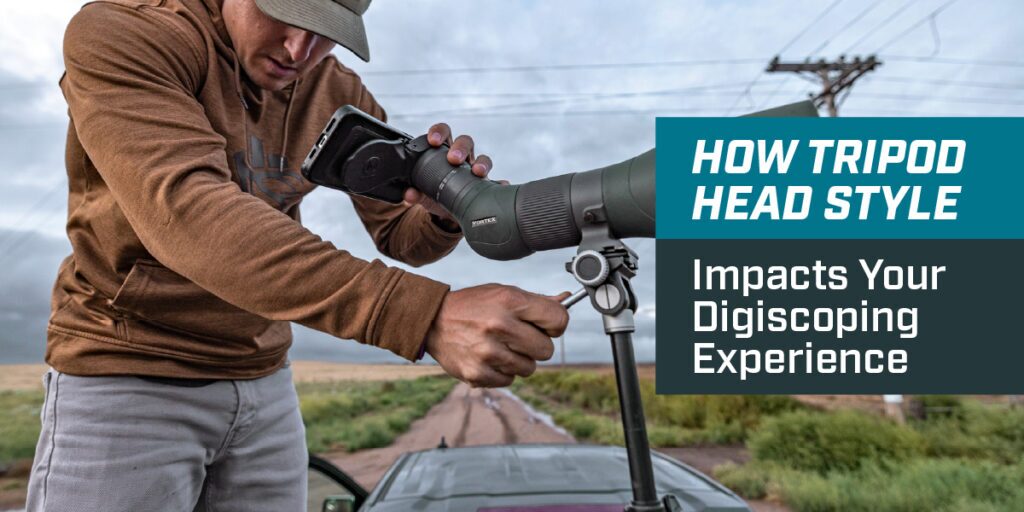
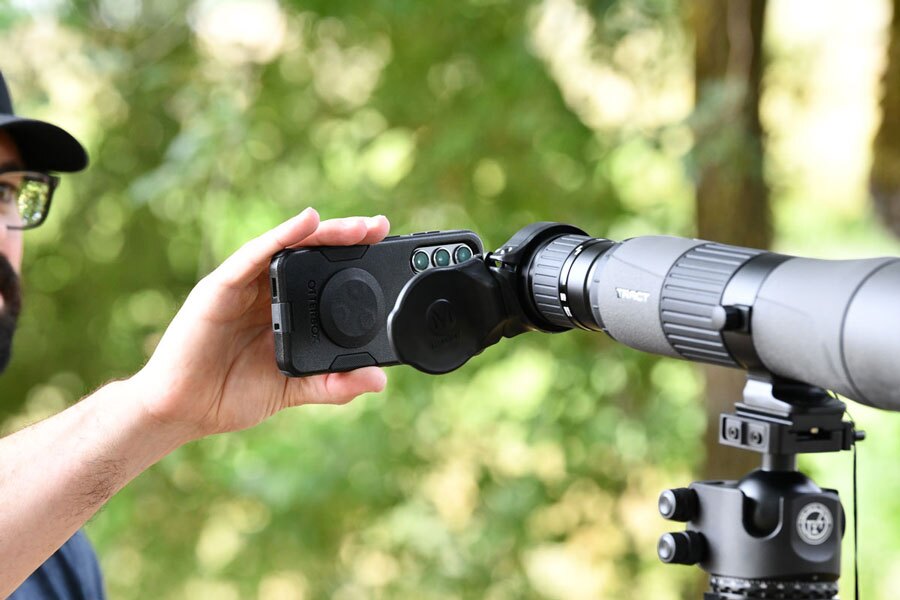
A MAGVIEW® adapter makes connecting your phone to your optic fast and effortless. But even with the fastest setup, a shaky image is a blurry image. At the extreme magnifications used in digiscoping—whether you’re documenting a shot, scouting game, or capturing wildlife video—your tripod head is one of the most critical components for ensuring rock-solid stability which can lead to image clarity.
Here is a breakdown of the three primary types of tripod heads and how they affect your digiscoping experience with your MAGVIEW setup.
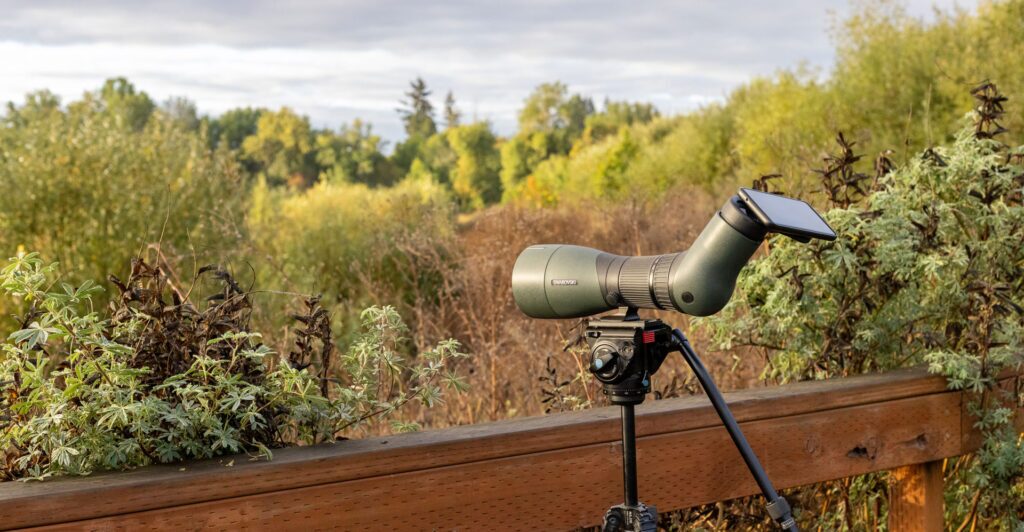
1. The Fluid Head: The King of Smooth Video
The fluid head (often called a video head) is the gold standard for anyone planning to capture video or track moving subjects for an extended period.
How it works
Fluid heads use internal hydraulic or grease-based damping cartridges that provide a controlled resistance, or “drag,” on the movement. This drag can smooth out an image when the head is in motion.
The pros of fluid heads
- Silky smooth video: The drag created by damping ensures panning (left-to-right) and tilting (up-and-down) movements are continuous and free of the jerky starts and stops common with other heads.
- Precision tracking: The controlled drag allows you to track a moving target (like a running animal) steadily without overshooting, making it ideal for glassing and live observation.
- Independent tension: Many fluid heads have dedicated tension knobs, allowing you to fine-tune the drag for a heavy spotting scope or a light binocular setup.
The cons
- Size and weight: Fluid heads are typically the largest and heaviest of the three due to their complex internal mechanisms. There are compact and lightweight heads available, but they may have less features compared to the larger heads.
- Cost: Quality fluid heads often carry a higher price tag.
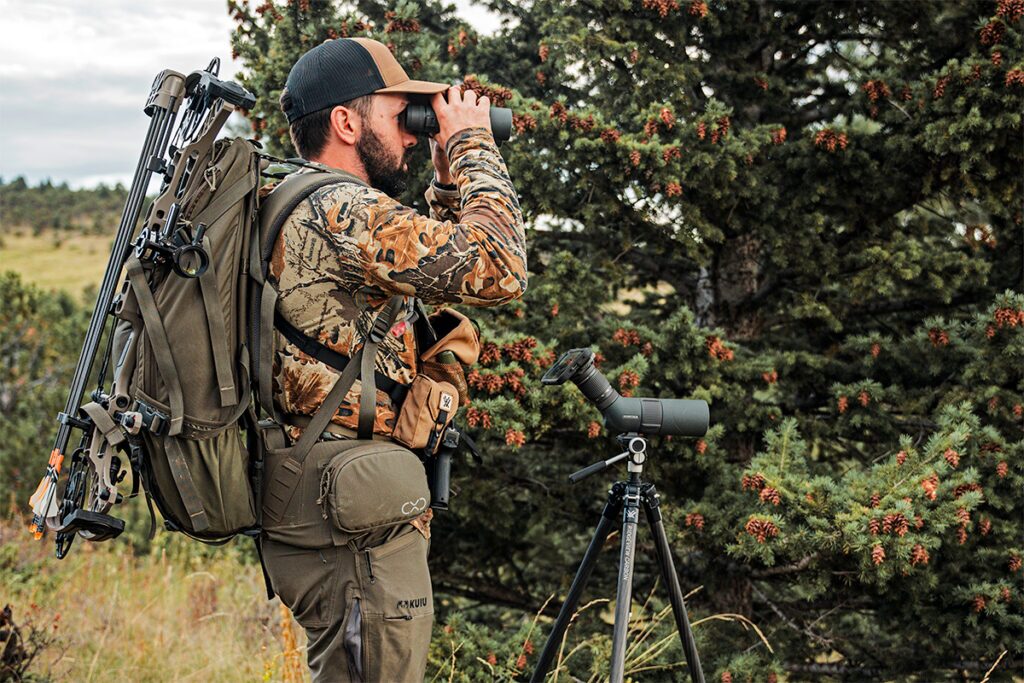
2. The Pan Head (or 2-Way / 3-Way Head): The Precision Workhorse
The pan head (which includes 2-way and 3-way designs) is a favorite among hunters and still photographers who prioritize stability and precise, straight-line control.
How it works
Pan heads have separate locks and handles for each axis of movement: pan (left/right) and tilt (up/down). A 3-Way head adds a third handle for lateral tilt (roll). They rely on friction to hold the position once the corresponding lever is locked down.
The pros of pan heads
- Accurate leveling: Because you can adjust the pan and tilt axis independently, it is easy to ensure your horizon is perfectly level and your vertical lines are straight, which is crucial for digiscoping panoramas.
- Excellent for glassing: You can lock the tilt axis, leaving only the pan axis loose. This allows you to smoothly scan a ridge line without inadvertently tilting up or down, making a systematic grid search much easier than with a ball head.
- Affordable: Generally, more affordable than high-end fluid heads while offering superior precision over ball heads.
The cons
- Slower adjustment: Making a radical change (e.g., from ground level to high-angle) requires unlocking and locking two (or three) separate levers, which is slower than a ball head.
- Bulk: The handles make the pan head bulky, increasing the chances of snagging it on brush or taking up space in a pack. Some users choose to modify their pan head by cutting down handles.
3. The Ball Head: The All-Rounder
The ball head is favored by mobile users who prioritize speed, versatility, and pack weight.
How It works
A ball head uses a simple ball-and-socket mechanism. Your optic is mounted atop the ball, and a single, large locking knob controls movement in all directions simultaneously. Ball heads come in several sizes and different weight ratings. Depending on your planned use, choose a ball head that can handle the weight of your optics.
The pros of ball heads
- Fast setup: When you spot a target and need to lock on quickly, you unlock one knob, frame your shot instantly, and lock it down again. It is the fastest head for overall repositioning.
- Compact and lightweight: The simple design makes them significantly smaller and lighter than the other two types, a huge advantage for hikers and mobile hunters.
- Maximum versatility: Allows for composition at virtually any angle with a single, quick adjustment.
The Cons
- Poor for video/glassing: The lack of independent drag control makes smooth panning for video or meticulous glassing difficult. It’s either locked or loose, requiring the user to maintain constant control over the optics.
- The flop: Anyone who has used a ball head with a heavy optic like a spotting scope can attest to rapid adjustments leading to the optic flopping. Because the tension knob on most ball head designs can make huge changes to tension rapidly, if you are not in control of the optic you risk the optic falling to the side (potentially toppling the tripod) or in some cases causing the optic to come loose from the head.
Summary: Which Head is Right for You?
| Goal | Best Head Type | Why? |
| Professional Video / Live Tracking | Fluid Head | Smooth, damped motion for flawless video and stress-free glassing. |
| Grid Glassing / Precise Photography | Pan Head | Independent axis control ensures level horizons and straight-line scanning for maximum focus. |
| Ultimate Portability / Quick Target Acquisition | Ball Head | Lightest, fastest, and most compact. |
No matter which tripod head you choose, ensure it has a high enough load capacity for your heaviest optic and digiscoping setup and fits your tripod of choice. The tripod head is a critical piece of gear for digiscoping or glassing in general, be sure to pick one that fits your needs the best. Read this blog to learn more about techniques to reduce camera shake while digiscoping.